Crate Training Puppies Made Calm and Simple
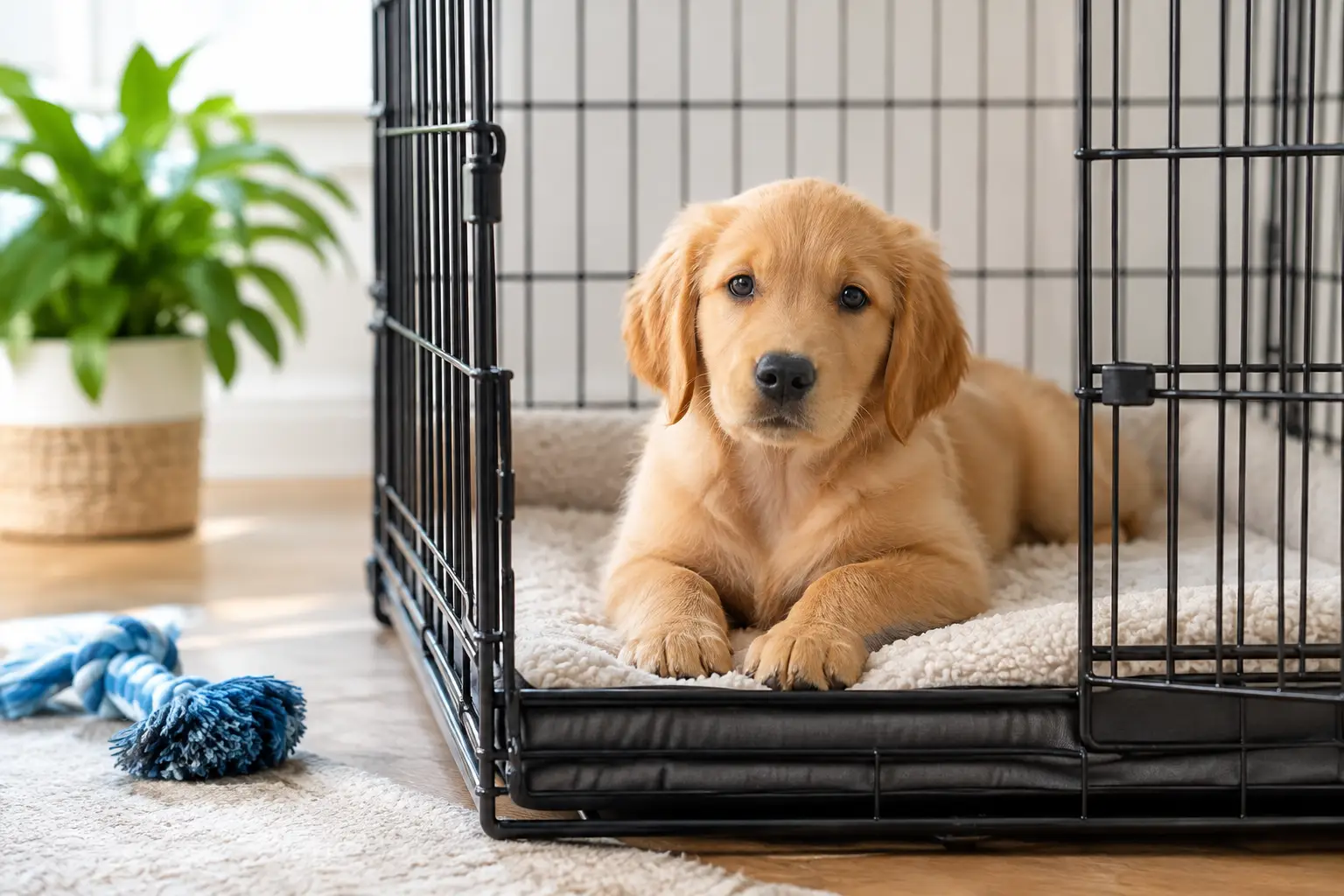
The first night home can feel very long when a puppy is calling from across the room. Crate training puppies gives them a predictable, protected place to rest while helping your family build a routine around sleep, potty breaks, and quiet time. Done patiently, a crate is not a punishment or a shortcut. It is a small, safe bedroom that helps a puppy settle into a brand-new home.
A few restless nights are normal. Your goal is not to make a puppy stay silent at all costs. Your goal is to meet their real needs, keep them safe, and teach them that the crate reliably means comfort, rest, and good things.
Start Crate Training Puppies Before the First Bedtime
Set up the crate before your puppy arrives, ideally in the area where the family spends time during the day. For the first several nights, many puppies do best with the crate in an adult's bedroom or just outside the door. They have recently left their littermates, familiar scents, and normal sleeping routine. Being close enough to hear and reassure them can prevent a frightened puppy from feeling isolated.
Choose a crate that allows your puppy to stand, turn around, and lie down comfortably, but is not so large that one end becomes a bathroom and the other a bed. If you are buying for a large-breed puppy, a divider panel lets the crate grow with them. Wire crates offer airflow and visibility, while plastic kennels can feel more enclosed and are often useful for travel. Either can work when the fit and setup are right.
Keep the space simple at first. Add a washable mat or thin bedding only if your puppy is not chewing or soiling it. A safe chew selected for your puppy's age and size can help during supervised crate time. Avoid loose blankets, stuffed toys with pieces that can come off, collars, harnesses, and anything that could snag on the crate. Safety matters more than making the crate look cozy.
If possible, ask the seller or breeding home what the puppy has experienced already. A puppy that has slept near littermates, heard household sounds, or spent short periods in a crate may adapt differently than one who has never seen one. At All Puppies, families can use seller communication to ask about current feeding, sleep, and potty routines before bringing a puppy home. That information makes the transition feel less like guesswork.
Make the Crate a Choice at First
Leave the crate door open and let your puppy investigate. Drop a few pieces of kibble inside, place part of a meal near the entrance, then gradually move the bowl farther back as your puppy becomes comfortable. Speak normally and let curiosity do the work. Pulling or pushing a puppy into the crate can create the exact worry you are trying to avoid.
Once your puppy walks in willingly, offer a meal or a safe food-stuffed toy inside with the door open. Later, gently close the door for a few seconds while they are eating, then open it before they become upset. Build time slowly: seconds first, then a minute or two, then a few minutes while you sit nearby.
The pace depends on the puppy. A confident Golden Retriever puppy may be ready for short closed-door rests quickly, while a more sensitive Dachshund or newly relocated puppy may need smaller steps. Progress is not measured by how fast you close the door. It is measured by whether your puppy remains relaxed enough to return voluntarily.
Build a Routine Around Potty Breaks and Sleep
Young puppies have small bladders and limited ability to wait. Take your puppy outside immediately after waking, eating, drinking a large amount, active play, and time in the crate. Use the same outdoor spot when you can, wait quietly, and praise warmly right after they finish. That clear timing helps puppies understand where bathroom trips happen.
For daytime crate practice, keep sessions short and purposeful. A puppy might rest in the crate while you shower, prepare dinner, take a work call, or help a child with homework. Start while you are still at home. Brief, successful practice teaches that the crate is normal, not a signal that everyone disappears.
At night, plan for at least one potty trip with a very young puppy, and sometimes more. If your puppy wakes and fusses after they have been asleep, take them outside calmly on leash. Keep lights low, skip playtime, and return them to the crate afterward. This teaches an important distinction: nighttime is for bathroom needs and sleep, not a midnight family gathering.
There is no single hourly rule that fits every puppy. Age, size, health, activity level, and individual development all matter. A young puppy should not be expected to spend a full workday in a crate. If your schedule requires long stretches away, arrange for a trusted family member, pet sitter, or appropriate daytime care, and create a safe puppy-proofed area when needed.
Know the Difference Between Protesting and Panic
Some whining is a normal response to a new routine. Before responding, pause briefly and consider the basics: Has your puppy recently gone potty? Are they hungry, too warm, cold, or due for a nap? Are they overtired after a busy day? Meeting those needs is not “giving in.” It is responsible puppy care.
If you are confident your puppy is safe and has just had a bathroom break, avoid opening the crate at the peak of brief attention-seeking noise. Wait for a moment of quiet, then offer calm reassurance from nearby. Opening the door only when a puppy is actively demanding it can accidentally teach them that louder crying works.
Panic looks different. Frantic escape attempts, heavy drooling, biting at the crate, throwing their body against the door, or distress that escalates rather than settles are signs to slow down. Do not force a puppy to “cry it out” through genuine fear. Return to shorter sessions, stay closer, and talk with your veterinarian or a qualified positive-reinforcement trainer if the behavior continues.
Avoid the Mistakes That Make Crates Harder
Never send your puppy to the crate as punishment after an accident, chewed shoe, or burst of puppy energy. Puppies do not connect delayed punishment with the behavior you disliked, but they can quickly connect the crate with feeling scared or excluded. Interrupt unwanted behavior calmly, redirect to an appropriate chew or activity, and manage the environment more carefully next time.
Do not use the crate to contain a puppy through every active part of the day. Puppies need supervised play, gentle training, outdoor exploration, social experiences appropriate for their vaccination status, and time with their people. A crate supports a healthy routine; it does not replace one.
Accidents will happen, especially during the first weeks. Clean them thoroughly with an enzyme-based pet cleaner, reassess the timing of potty trips, and avoid scolding. Repeated accidents can mean the crate is too large, breaks are too far apart, or a health issue needs veterinary attention.
Consistency also matters across the household. Decide where the crate will go, what cue you will use, when meals happen, and who handles late-night potty breaks. When adults and children follow the same calm routine, a puppy gets clearer information and settles faster.
Help the Crate Become Part of Family Life
As your puppy gains confidence, practice crate time at different points in the day. Let them rest after a walk, nap while the family is nearby, and spend a few minutes inside while you step into another room. Offer praise and occasional treats for choosing the crate on their own. Many adult dogs continue to seek out their crate because it remains their quiet place.
Eventually, you may leave the crate door open or transition to a gated room, depending on your dog's maturity, chewing habits, and comfort. There is no prize for retiring the crate early. If it remains a safe, positive option, it can be helpful during travel, recovery after illness or injury, visitors, and any moment your dog needs a peaceful break.
Tonight, keep the first session small: toss in a few pieces of kibble, let your puppy step inside, and celebrate the choice. That patient beginning can turn a simple crate into one of the most reassuring parts of your puppy's new home.