How Protected Puppy Payments Work for Families
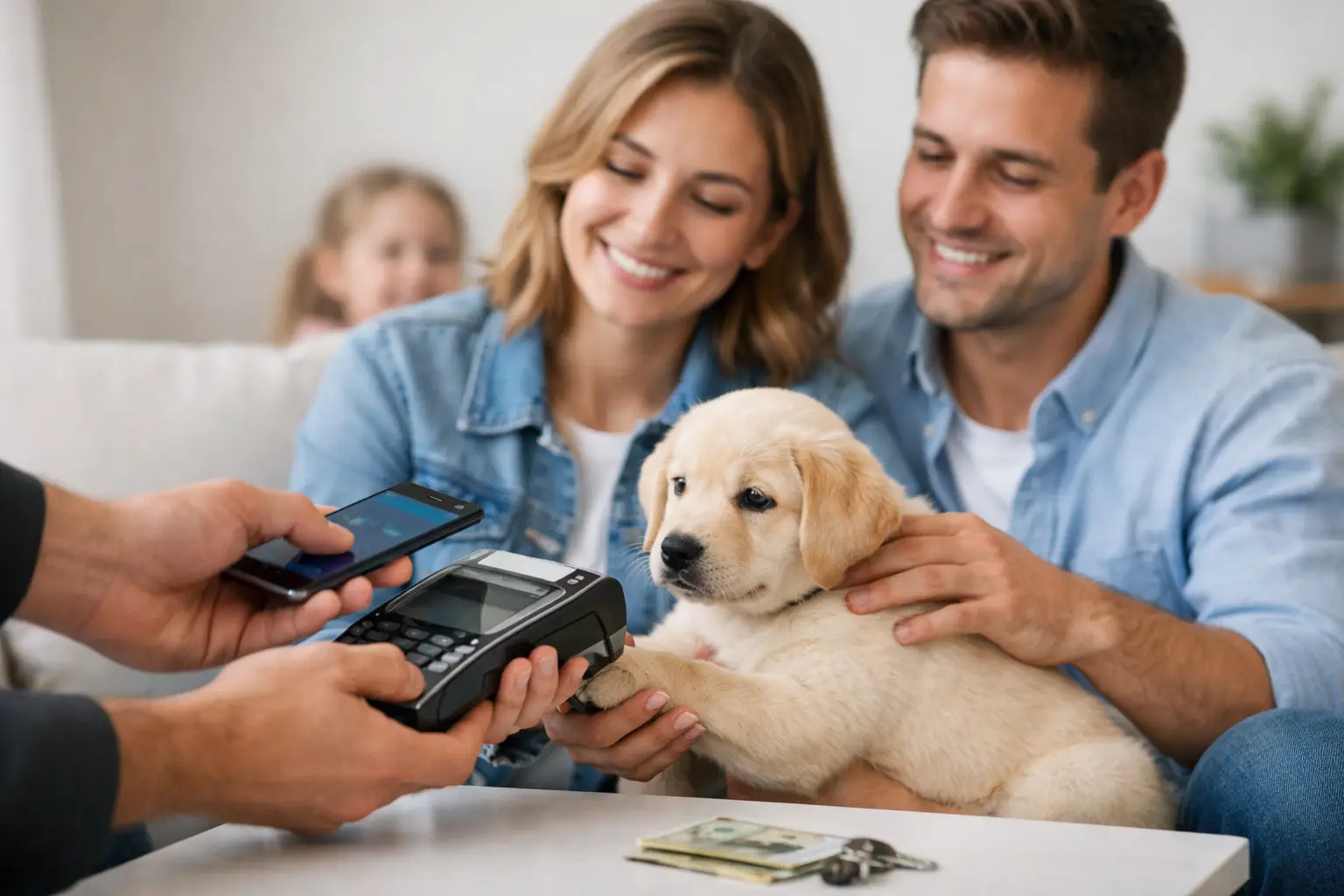
A puppy should come with excitement, not the uneasy feeling of sending money to someone you have never met. That is why understanding how protected puppy payments work matters before you place a deposit or make a final payment. The right process gives buyers a clear record of the agreement, keeps payment tied to the planned delivery, and helps responsible sellers know they are working with committed families.
Protected payments are designed to replace the uncertainty of a direct peer-to-peer transfer with a more accountable path. No guesswork, no surprises: you can focus on preparing for your new puppy while knowing there is a documented process behind the transaction.
What a protected puppy payment means
A protected puppy payment is made through a secure marketplace payment process rather than sent directly to a seller through cash, wire transfer, gift card, or an unfamiliar payment app. The payment is recorded with the puppy listing and transaction details, creating a clear connection between the money, the seller, and the puppy you agreed to bring home.
In many protected-payment arrangements, funds are held until the agreed delivery or pickup is completed. This does not mean a buyer can change their mind at any time without consequences, and it does not mean a seller has to wait indefinitely after fulfilling their obligations. It means the release of funds is connected to the milestones both parties agreed on.
The exact timing can depend on the listing terms, whether there is a deposit, the puppy’s age and readiness date, and how delivery is arranged. Read the payment terms for the specific puppy before you proceed. A good process is transparent about what is due now, what is due later, and what happens if plans change.
How protected puppy payments work from deposit to delivery
The process usually begins once you have found a puppy, reviewed the available information, and spoken with the seller. Before money changes hands, take time to look at the puppy’s health records, parent details when available, seller profile, reviews, location, and expected go-home date. Payment protection is valuable, but it works best alongside careful research.
1. You choose the puppy and review the terms
A responsible seller should be able to explain the puppy’s current age, care routine, health documentation, vaccination or deworming information as applicable, and when the puppy will be ready to leave. You should also understand whether your first payment is a reservation deposit or the full purchase amount.
A deposit typically reserves a particular puppy for your family. Ask whether it is refundable, partially refundable, or nonrefundable under certain circumstances. These terms should be clear before you pay, not explained after a disagreement arises. For example, a deposit may be handled differently if a buyer simply changes plans than if the seller cannot provide the puppy as represented.
2. You pay through the protected checkout process
Instead of sending money directly, you complete payment through the marketplace’s payment system. This creates a transaction record that can show the amount paid, the date, the puppy involved, and the relevant terms.
Keep your receipts, messages, and any agreed delivery details in one place. A protected payment process is not a reason to skip communication. It is a structure that supports clear communication when it matters most.
Be cautious if someone asks you to leave the platform to pay by wire, cryptocurrency, gift cards, or a payment method with no meaningful record or recourse. Pressure to pay immediately is another warning sign. A trustworthy seller understands that bringing home a puppy is a meaningful family decision.
3. The puppy’s preparation and delivery are coordinated
Between reservation and go-home day, the seller continues caring for the puppy while you prepare your home. This is the right time to confirm practical details: the pickup or delivery date, who will be transporting the puppy, what health records will travel with the puppy, and how you will receive updates.
For delivery, ask for the planned handoff location and estimated timing. If weather, travel conditions, or the puppy’s well-being require a change, a responsible seller or delivery provider should communicate promptly. A safe plan always puts the puppy’s welfare ahead of a rushed schedule.
4. Funds are released after the agreed delivery milestone
Once delivery or pickup is completed according to the transaction terms, the seller receives the funds. This approach recognizes the seller’s work and care while giving the buyer confidence that payment is not simply gone before the puppy arrives.
Before accepting your puppy, take a calm moment to confirm that the puppy matches the listing and that you have received the expected records and paperwork. You are not conducting a veterinary examination at the doorstep, but you should not feel rushed past obvious questions either. If anything seems materially different from what was promised, document it and contact the marketplace’s support team right away through the proper channel.
What payment protection does and does not cover
Protected payments help reduce common transaction risks, especially when buyers and sellers live far apart. They provide a documented payment trail and tie fund release to delivery. They can also make it easier to raise concerns through a defined support process instead of trying to resolve a problem alone with an unverified stranger.
Still, no payment process can replace thoughtful decision-making. Protection does not guarantee that every puppy will be a perfect fit, predict every future health issue, or remove your responsibility to read the seller’s policies. Puppies are living animals, and even carefully raised puppies can have needs that emerge over time.
That is why the strongest purchase experience combines protected payment with verified seller information, available health files, honest conversations, and realistic expectations. At All Puppies, families can review those details before arranging a protected transaction, helping them make a decision based on more than a few photos and a quick message.
Questions to ask before you pay
Before submitting a payment, make sure you can answer a few straightforward questions. What amount is due today, and what does it reserve? When is the balance due? Is the deposit refundable under any circumstances? What is the target pickup or delivery date? Which records will come with your puppy? Who should you contact if a delivery issue or documentation concern arises?
You should also ask about the seller’s preferred communication during the wait. Many families appreciate updates, especially when a puppy is still growing and not yet ready to go home. A seller who communicates clearly about milestones, feeding, socialization, and the go-home schedule helps build trust well before delivery day.
If an answer is vague, inconsistent, or suddenly changes after you ask for it in writing, pause. The safest place to find your puppy is one where the details hold up when you take a closer look.
A safer way to begin your puppy’s homecoming
Bringing home a puppy is a long-term commitment, and the payment step should support that commitment rather than overshadow it with worry. Protected payments give families a clearer path: review the puppy and seller, understand the terms, pay through a recorded process, and complete the transaction when delivery happens as agreed.
Give yourself permission to slow down before paying. The right puppy journey leaves room for questions, careful preparation, and the happy moment when your new companion finally walks through the door.