15 Puppy Breeder Questions to Ask Before You Buy
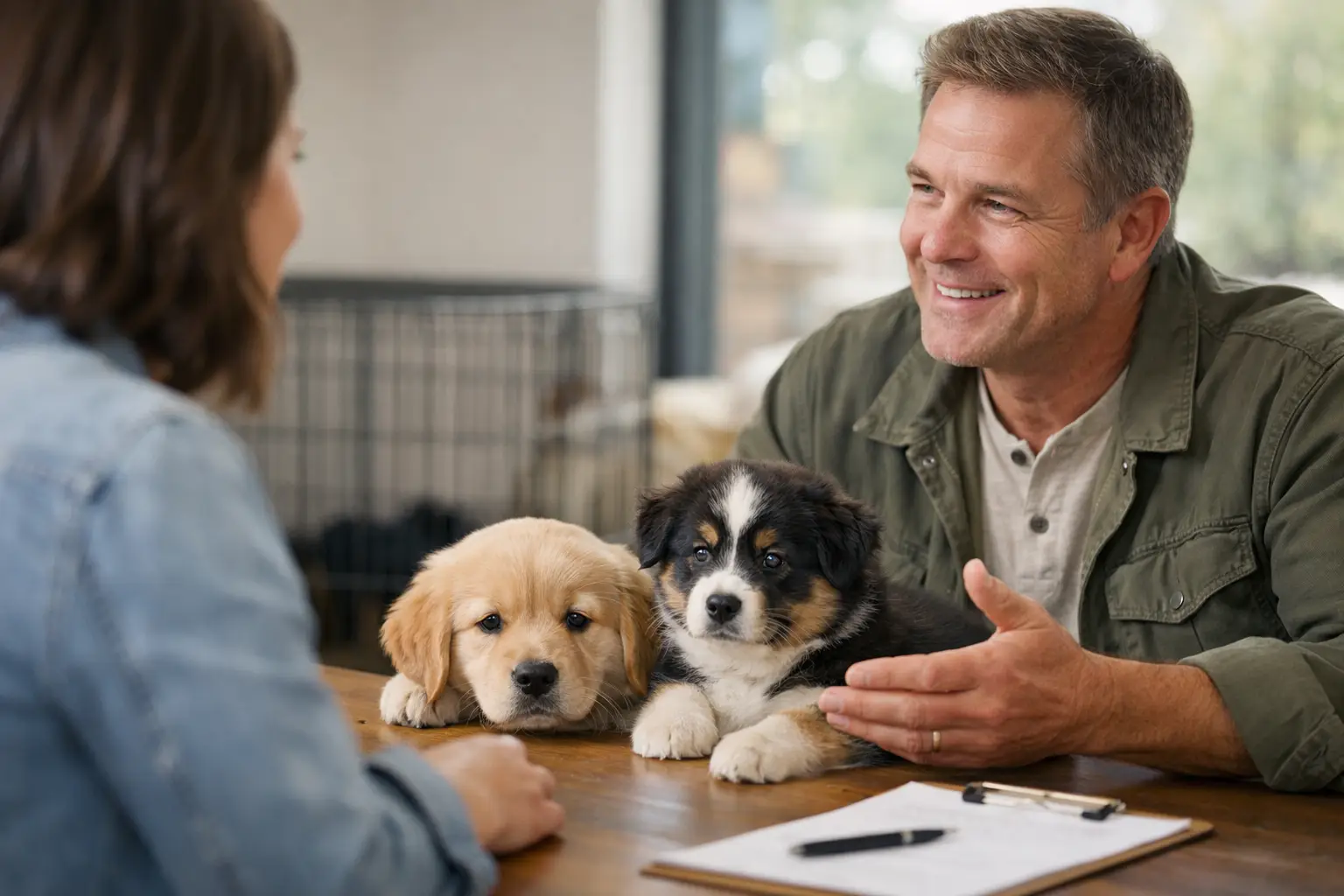
A puppy photo can make a decision feel immediate. The right conversation should slow it down in the best way. These puppy breeder questions to ask help you look past a cute face and understand the puppy’s health, early care, family background, and path home. A responsible seller should welcome clear questions. No guesswork, no surprises.
Start with the puppy’s health and early care
1. What veterinary care has this puppy received?
Ask for the puppy’s health records, including exam dates, vaccinations, deworming, and any treatment already provided. Ask what your veterinarian will need to know after pickup or delivery. A health record is more useful when it is specific: it should identify the puppy, show dates, and explain what care was given rather than simply saying the puppy is “healthy.”
2. Has the puppy had any health concerns?
Every puppy is an individual, and honest answers matter more than a perfect-sounding one. Ask whether the puppy has had digestive upset, a respiratory illness, an injury, a hernia, an abnormal bite, or any concern identified during a veterinary exam. Also ask what has resolved, what is being monitored, and whether follow-up care is recommended.
3. What health testing was completed for the parents?
The right testing depends on the breed. For example, some breeds may need screening related to hips, elbows, eyes, hearts, patellas, or inherited genetic conditions. Ask which tests were completed, what the results were, and whether you can review the documentation. “Vet checked” and breed-specific health testing are not the same thing.
4. Can I see information about both parents?
Parent details give you a clearer picture of the puppy’s likely size, coat, energy level, and temperament. Ask for photos, records, and available information about each parent’s personality and health. The sire may live elsewhere, which is common, but the seller should still be able to explain who he is and provide relevant documentation.
5. What are the parents like around people and other dogs?
Temperament is shaped by genetics, early experiences, training, and the puppy’s own personality. It cannot be promised with complete certainty. Still, a thoughtful description of the parents can be helpful, especially for families with children, cats, or another dog. Ask how the parents respond to handling, visitors, household activity, and unfamiliar dogs.
Puppy breeder questions to ask about the home
6. Where was the puppy raised?
Ask whether the litter was raised in the seller’s home, in a dedicated nursery, or in another setting. There is no single setup that guarantees quality, but the puppies should be clean, comfortable, supervised, and accustomed to regular human care. Ask how the space is kept sanitary and how the seller monitors each puppy’s eating, weight, and behavior.
7. Can I visit or have a live video call?
An in-person visit can help you see the puppy’s environment and meet the dam when appropriate. If distance or biosecurity makes a visit impractical, ask for a live video call rather than relying only on polished photos. You should be able to see the puppy moving naturally and ask questions in real time. A seller may limit visitors to protect young puppies from illness, so ask about the reason and the alternatives offered.
8. How has the puppy been socialized?
Early, gentle exposure helps puppies grow more comfortable with normal family life. Ask whether the puppy has experienced household sounds, being held, nail trims, crate time, car rides, different floor surfaces, and age-appropriate introductions to people. Socialization should be thoughtful, not overwhelming. Very young puppies need rest and safety as much as they need new experiences.
9. What food is the puppy eating, and what routine does it follow?
A sudden change in food and schedule can be hard on a puppy. Ask for the food brand and formula, feeding times and portions, sleep routine, potty habits, and whether the puppy has begun crate or pad training. This information will make the first days at home calmer and help you spot a change that may need veterinary attention.
10. At what age can the puppy go home?
Puppies need enough time with their mother and littermates to develop. Ask for the planned go-home date and why it is appropriate for that puppy and your state’s requirements. Be cautious if someone pressures you to take a very young puppy home quickly. A responsible seller puts the puppy’s development ahead of a rushed sale.
Ask about your responsibilities, too
11. What does your contract cover?
Read the agreement before sending a deposit or making travel plans. Ask what it says about health guarantees, return expectations, spay or neuter requirements, registration papers if applicable, and what happens if the seller cannot complete the placement. A contract should be understandable and balanced, not a document you are expected to accept without time to review.
12. What support do you provide after the puppy goes home?
The first week with a puppy brings plenty of normal questions. Ask whether the seller is available to discuss feeding, adjustment, health records, or the puppy’s early routine after placement. Good support does not replace your veterinarian or trainer, but a breeder or seller who knows the litter can offer useful context as your puppy settles in.
13. What happens if my circumstances change?
This is a hard question, but it reveals a great deal about a seller’s commitment to their dogs. Ask whether they will take the dog back, help rehome the dog, or require that you contact them first if you can no longer provide care. Responsible breeding homes want their puppies to remain safe for life, not just through the sale.
Protect the transaction and the trip home
14. How do payment and deposits work?
Ask for the total price, what the deposit covers, when the remaining balance is due, and whether any part is refundable. Get those terms in writing. Avoid pressure to pay through methods that offer no recourse or to send money before you have reviewed the puppy’s details, records, and seller information. Protected payment processes add a valuable layer of reassurance, especially when a puppy is traveling across state lines.
15. How will pickup or delivery be handled safely?
Ask who is responsible for transportation, how the puppy will travel, what paperwork comes with the puppy, and what happens if weather or travel conditions cause a delay. For delivery, ask for realistic timing and communication expectations. The puppy should travel in a safe, climate-appropriate setup with planned breaks and attentive care, not as an afterthought.
Signs the conversation is going well
A trustworthy seller does not need to have a rehearsed answer for every detail, but they should be open, consistent, and willing to share records. They should ask you questions, too: about your home, schedule, dog experience, other pets, and plans for veterinary care. That mutual care is a good sign that the placement matters more than making a fast sale.
It also helps to compare the answers with the information you can review in a verified listing. On All Puppies, families can look for documented health details, parent information, seller profiles, and buyer reviews before starting a conversation. Those details do not replace your own judgment, but they give you a stronger place to begin.
If an answer feels vague, a record is missing, or the seller makes you feel rushed, pause. The right puppy is worth waiting for, and the right seller will understand why your family needs confidence before bringing a new life home.