Puppy Buying Safety Trends Families Should Know
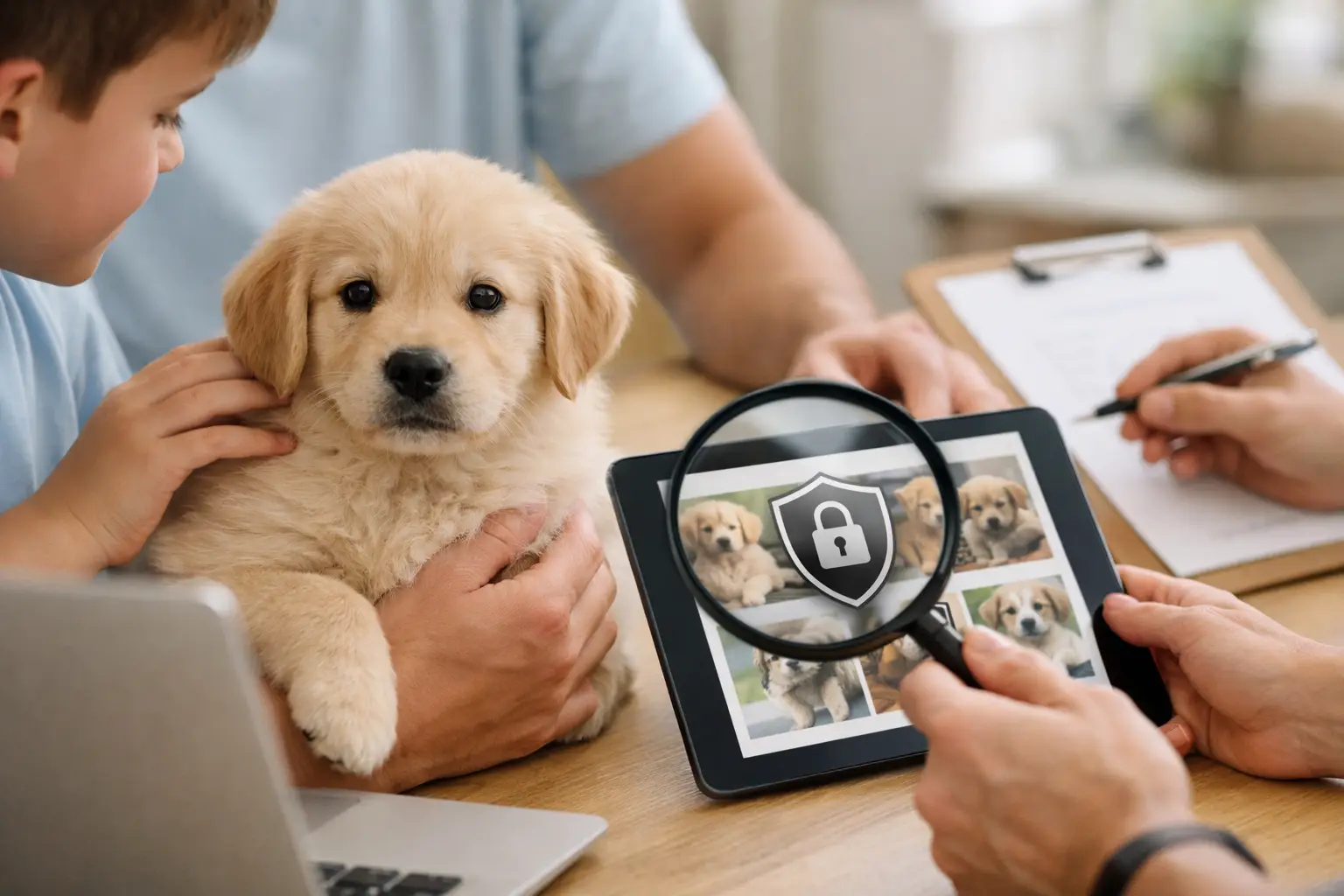
A puppy photo can make a family feel ready in seconds. But puppy buying safety trends show that the safest decisions happen before anyone sends a deposit, arranges delivery, or tells the kids a new best friend is on the way. More buyers are looking beyond adorable pictures and asking for the information that protects both their family and the puppy.
That shift is good news. Responsible breeding homes have meaningful details to share, from health records and parent information to the puppy’s early care and temperament. The goal is not to make buying a puppy feel stressful. It is to replace uncertainty with clear answers. No guesswork, no surprises.
Puppy Buying Safety Trends: What Is Changing
For years, many puppy purchases began and ended in informal online listings. A buyer saw a photo, exchanged a few messages, sent money, and hoped the puppy and seller were exactly as described. That approach can work when people know each other personally, but it leaves too much room for hidden health concerns, false identities, payment scams, and last-minute changes.
Today, families increasingly expect a more complete picture before committing. They want to know who is raising the puppy, where the puppy came from, whether the seller can be identified, and what care the puppy has received. They also want a process that gives them time to ask questions without feeling pushed to pay immediately.
This does not mean every responsible seller will have the same setup. A small in-home breeding program may look very different from a larger, experienced breeding home. What matters is whether the information is consistent, specific, and willingly shared. A responsible seller should be able to explain their practices in plain language, not avoid reasonable questions or rush you past them.
Verification is becoming a starting point
One of the clearest trends is that buyers no longer want to rely on a profile name or a single phone number. Seller identity verification helps create accountability. It gives families a better foundation for conversations and makes it harder for anonymous bad actors to disappear after collecting money.
Verification is not a substitute for your own judgment. You should still read the seller’s profile carefully, look at reviews, ask about the puppy’s routine, and pay attention to how clearly questions are answered. But it is a meaningful first layer of protection, especially when you are searching beyond your local area.
Health information is moving from promise to proof
“Healthy puppy” is a reassuring phrase, but it is not enough on its own. Families are increasingly asking to see documented health information, vaccination and deworming details appropriate for the puppy’s age, veterinary records when available, and any known health considerations.
The same is true for parent information. Learning about the puppy’s mother and father can help you understand likely size, appearance, energy level, and breed-related health questions. It is not a guarantee of a puppy’s future, because living beings are never fully predictable. Still, transparent parent details are far more useful than vague assurances.
If a seller says a record will be provided, ask when and how. Check that dates, puppy details, and veterinary information make sense together. A genuine seller should welcome respectful questions about the records. If documents are blurry, incomplete, inconsistent, or repeatedly promised but never delivered, pause the process.
How Families Can Use These Trends to Buy More Safely
Safer puppy buying is not about becoming suspicious of every breeder. It is about building a decision around facts rather than urgency. A good process lets you enjoy the excitement while protecting your household from a painful surprise.
Start by considering the kind of dog that fits your life. A French Bulldog, Golden Retriever, Poodle, German Shepherd, Dachshund, or Siberian Husky may all be wonderful companions, but their exercise needs, grooming, size, training needs, and common health considerations differ. Choosing a breed based only on appearance can create pressure later, for both the family and the dog.
Once you find a puppy you love, slow down long enough to review the listing details. Look for a clear age, location, expected availability, health information, and parent details. High-quality listings generally feel specific. They describe the puppy as an individual instead of relying only on broad claims such as “perfect” or “rare.”
Have a real conversation before you reserve
Messaging is one of the most useful safety tools when buyers use it well. Ask where the puppy is being raised, what the puppy eats, how the puppy has been socialized, and what daily life has been like so far. If you have children, other pets, or a particular home environment, share that honestly. A caring seller wants an appropriate match, not simply the fastest sale.
You can also ask what support or guidance the seller provides as pickup or delivery approaches. The answer does not need to be elaborate. What you are looking for is a seller who knows the puppy, communicates clearly, and treats the transition home as more than a handoff.
Be cautious if the conversation stays generic, if you are pressured to act within minutes, or if the seller will only communicate through an unusual channel. Pressure is one of the oldest warning signs in high-risk transactions. A puppy may have genuine interest from other families, but you should never be told that paying immediately is the only way to get basic information.
Treat payment protection as a non-negotiable
Payment safety is one of the biggest changes in how families evaluate puppy listings. Buyers increasingly understand that sending money directly to an unfamiliar person offers little protection if plans change or the puppy never arrives.
A protected payment process is designed to create a fairer path for both sides. The buyer can move forward with greater confidence, and the seller can prepare for the puppy’s new home knowing the family is serious. Payments protected until delivery help reduce the risk of a transaction depending solely on trust between strangers.
Be especially careful with requests for gift cards, wire transfers, cryptocurrency, cash-app payments sent to an unrelated name, or additional surprise fees after you have paid. Delivery, travel crates, insurance, and “refundable” permits are often used as excuses in puppy scams. Before paying anything, make sure the full price, deposit terms, delivery plan, and any expected fees are clearly explained.
Safe Delivery Requires Details, Not Assumptions
Nationwide puppy searches give families more options, particularly when they are looking for a specific breed or a carefully matched temperament. But distance adds a practical question: how will the puppy get home safely?
A trustworthy delivery plan should be clear about timing, handoff location, who is responsible for transport, and what the puppy needs during the trip. Ask what communication you can expect on delivery day and what happens if weather or travel conditions require a change. A responsible plan puts the puppy’s welfare ahead of an unrealistic schedule.
There is a trade-off here. Local pickup can allow a family to meet the seller in person, while safe, coordinated delivery can make it possible to find the right puppy outside their immediate area. Neither option is automatically better. The safer choice is the one supported by transparent information, reliable communication, and a plan that respects the puppy’s needs.
Warning Signs That Still Matter
New tools have improved the puppy-buying experience, but familiar red flags have not disappeared. Be ready to walk away if a price seems dramatically lower than comparable puppies, the photos appear copied or inconsistent, the seller refuses to discuss health information, or the story changes from one message to the next.
Also pay attention to what is missing. A listing with no clear location, no parent information, no health details, and no way to understand the seller’s background asks you to take too much on faith. The right puppy is worth waiting for. A family should never feel that asking for proof means they might lose their chance.
At All Puppies, families can look for verified seller information, health files, parent details, reviews, and protected payments in one guided process. Those details do not take the heart out of finding a puppy. They protect the moment your family has been waiting for.
When you finally choose your puppy, keep the same steady approach through the ride home. Have a veterinarian selected, prepare a quiet space, bring the supplies your puppy needs, and give everyone time to adjust. The safest place to find your puppy is one where care, transparency, and confidence all start before the first tail wag at your door.