Your Puppy Care Guide for a Calm First Month
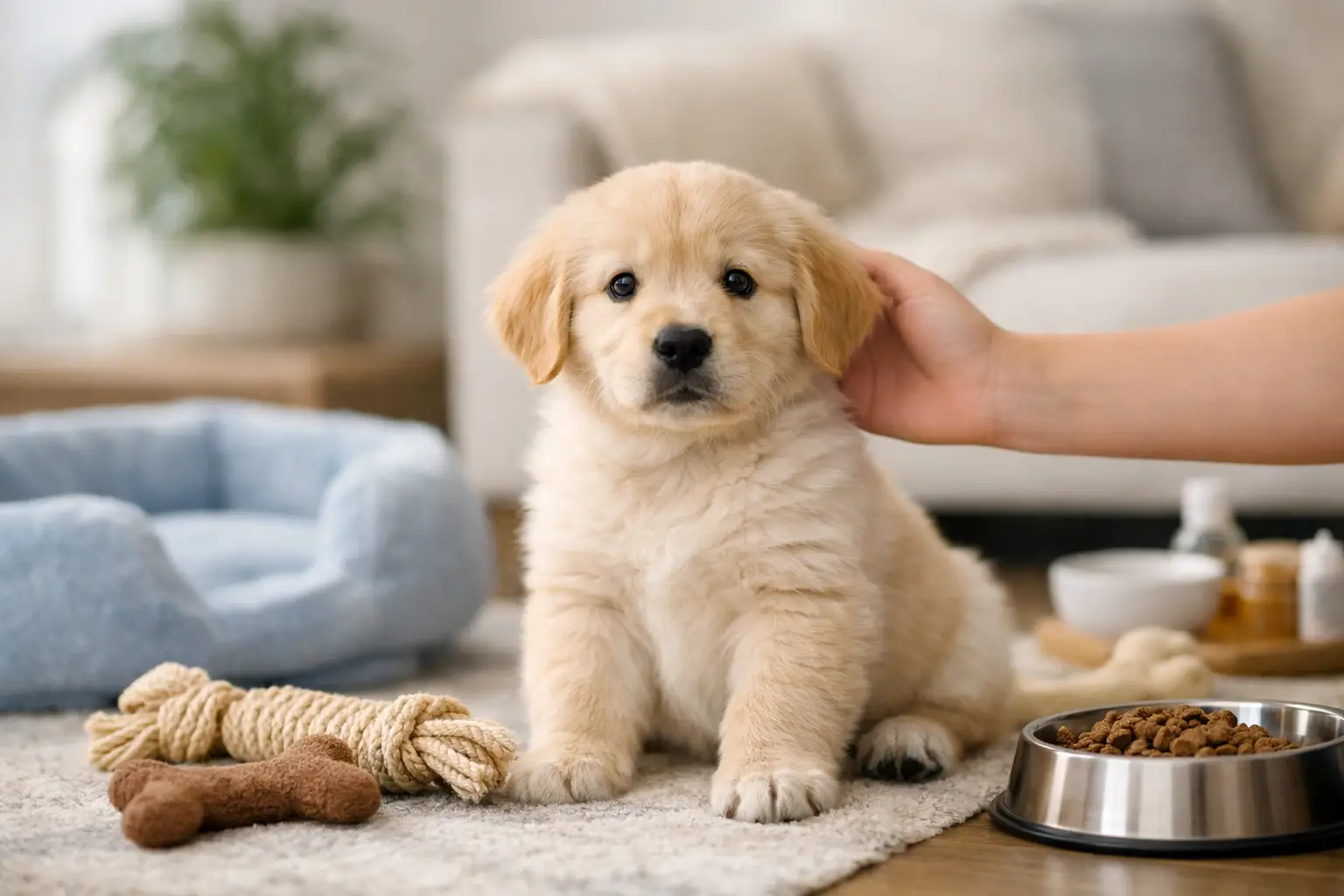
The first night with a new puppy can be sweeter and louder than you expect. There may be tiny paws, a missed potty break, and a puppy who misses the warmth of its littermates. This puppy care guide gives your family a clear plan for the first month, so you can focus less on guessing and more on helping your puppy feel safe.
A healthy start begins before pickup day. Review the puppy’s health records, vaccination and deworming information, feeding routine, and parent details. Ask the seller what food the puppy eats, when meals are offered, where the puppy sleeps, and how often it goes outside. Familiar routines make the move easier on a young dog’s stomach and stress level.
Set Up a Safe Space Before Your Puppy Arrives
Your puppy does not need a house full of toys on day one. It needs a calm, contained place to rest, chew safely, and learn the rhythm of your home. Choose an easy-to-clean area near family activity, but not in the middle of constant noise.
A properly sized crate or puppy pen can help with sleep, supervision, and house training. The crate should be large enough for your puppy to stand, turn around, and lie down comfortably, but not so large that one end becomes a bathroom. Add simple bedding only if your puppy is not chewing or swallowing it.
Puppy-proofing is not a one-time task. Get down at puppy level and look for electrical cords, medications, cleaning supplies, small toys, socks, shoes, and houseplants. Puppies explore with their mouths, and a swallowed object can quickly become an emergency. Use closed containers and gates rather than relying on repeated corrections.
Keep the first few days quiet. A steady flow of visitors may be exciting for people, but it can overwhelm a puppy that has just left its mother and siblings. Let close family members meet the puppy gently, one at a time, and give the puppy plenty of chances to nap.
Feeding Your Puppy Without Upsetting Their Stomach
For the first several days, feed the same food and schedule the puppy had with the seller unless your veterinarian advises otherwise. A sudden food change is a common cause of diarrhea, which can be more serious for small puppies because dehydration can happen quickly.
Most young puppies need several small meals a day. The right amount depends on age, breed, expected adult size, food type, and activity level. Use the food package as a starting point, then ask your veterinarian to help you adjust portions as your puppy grows. Fresh water should always be available, except when your veterinarian gives a different instruction for a specific medical reason.
If you plan to switch foods, do it gradually over about a week by mixing increasing amounts of the new food with the old. Treats should stay modest during training. A puppy who fills up on treats may skip balanced meals, and rich snacks can upset a sensitive stomach.
Call your veterinarian promptly if your puppy has repeated vomiting, ongoing diarrhea, refuses food, seems unusually sleepy, or has a swollen belly. Young puppies can go downhill faster than adult dogs. Trust your instincts when something feels off.
Build a Routine for Potty Breaks and Sleep
House training works best when the schedule is predictable. Take your puppy to the same potty area after waking up, after eating or drinking, after play, and before bed. Very young puppies also need frequent daytime breaks between those moments. Carry small puppies outside if needed to prevent an accident on the way.
When your puppy goes in the right spot, praise immediately and warmly. The timing matters more than a long celebration. If an accident happens indoors, clean it with an enzyme-based pet cleaner and move on. Scolding after the fact teaches fear, not location.
Nighttime takes patience. A puppy may need one or more overnight potty trips at first. Keep those trips quiet and brief: outside, potty, praise, then back to bed. Avoid turning 2 a.m. into playtime. Many families find that placing the crate near the bed for the first few nights helps the puppy settle and lets you hear when it needs to go out.
Puppies sleep a lot, often 18 to 20 hours each day. That is normal. Overtired puppies can become mouthy, wild, or fussy in ways that look like extra energy. Regular naps are just as valuable as play sessions.
Start Training With Kind, Clear Boundaries
Your puppy is learning your household rules from the moment it arrives. Choose a few priorities first: responding to their name, coming when called, sitting for attention, relaxing in the crate, and chewing appropriate toys. Keep lessons short, positive, and frequent. A minute or two at a time is plenty for many young puppies.
Everyone in the household should use the same cues and rules. If one person allows jumping on the couch and another punishes it, the puppy receives mixed messages. Decide where the puppy can sleep, which rooms are off-limits, and what behavior earns attention before habits take hold.
Mouthing is common, especially during teething. Redirect teeth to a safe chew toy, then calmly pause interaction if teeth return to skin. Avoid rough hand play, which can make it harder for a puppy to understand the difference between a toy and a person.
A reward-based puppy class can be a helpful next step once your veterinarian says your puppy is ready. Training is not only about manners. It strengthens communication between your family and your dog, which matters for safety throughout the dog’s life.
Socialize Carefully, Not Recklessly
Socialization means helping your puppy have positive, age-appropriate experiences with people, sounds, surfaces, handling, car rides, and friendly, healthy dogs. It does not mean introducing your puppy to every dog park or crowded public place immediately.
Your puppy’s vaccination status matters. Before the full vaccine series is complete, avoid places where unknown dogs may have eliminated, including dog parks, pet store floors, and shared apartment dog areas. Your veterinarian can give guidance based on disease risk in your community.
You can still create good experiences safely. Invite a calm, vaccinated dog to meet your puppy in a clean private yard. Let the puppy hear the vacuum from a comfortable distance. Offer treats while you gently touch paws, ears, and collar. Keep each experience brief and watch your puppy’s body language. A puppy that freezes, hides, or tries to escape needs more space, not pressure.
Make Veterinary Care Part of the Plan
Schedule an initial veterinary visit soon after bringing your puppy home, even when the puppy appears healthy and has records from the seller. Your veterinarian can perform a full exam, review vaccination and deworming records, discuss parasite prevention, and set a plan for upcoming visits.
Bring all paperwork with you, including health certificates, vaccination dates, microchip information if available, and details about food or medications. This is also the right time to ask about spaying or neutering timing, dental care, grooming needs, and safe exercise for your puppy’s breed and size.
Emergency signs deserve quick action. Seek veterinary advice right away for trouble breathing, collapse, seizures, pale gums, repeated vomiting, bloody diarrhea, severe lethargy, a suspected toxin, or an object that may have been swallowed. Save the number for your regular veterinarian and the nearest emergency clinic before you need it.
Give Your Family Time to Adjust
The first month is a learning period for everyone. Your puppy may be confident one day and uncertain the next. Children may need reminders to let a sleeping puppy rest and to use gentle hands. Adults may need to divide feeding, potty, training, and cleanup duties so no one carries the whole load.
A trusted marketplace experience can reduce uncertainty before your puppy comes home. At All Puppies, families can review seller information, health records, parent details, and communication history before making a commitment. That transparency gives you a stronger starting point, but daily care is where trust becomes a lasting bond.
You do not need a perfect first month. You need a safe home, a reliable routine, prompt veterinary care, and the patience to celebrate small progress. Every peaceful nap in the crate, successful potty trip, and gentle tail wag is your puppy learning that this is home.