Socializing New Puppies the Safe, Simple Way
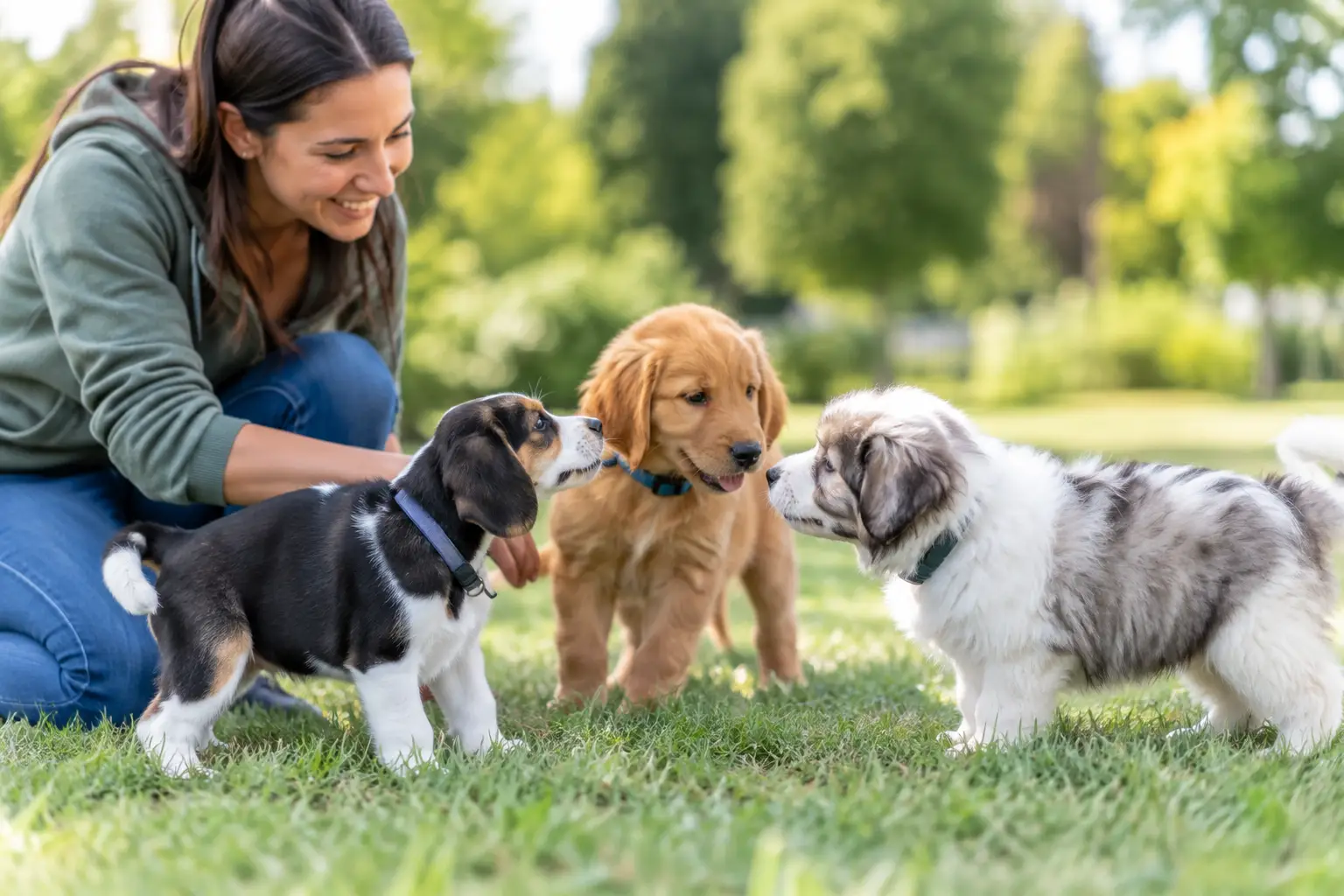
The first week home can feel like a blur of feeding schedules, potty trips, and puppy naps. Yet socializing new puppies starts right there, in the ordinary moments: the doorbell, the washing machine, a neighbor saying hello, and gentle hands checking tiny paws. Done thoughtfully, these early experiences help a puppy learn that the human world is safe, predictable, and worth exploring.
Socialization is not about making your puppy meet everyone or tolerate every situation at once. It is about building positive associations before the world feels too big. A puppy who has calm, well-managed exposure to people, surfaces, sounds, travel, and friendly dogs is more likely to grow into a confident companion. The goal is not a puppy who loves everything. The goal is a dog who can recover, communicate, and feel secure.
Why the First Months Matter
Puppies have a sensitive social development period, generally during their first few months of life. They are especially open to forming opinions about new experiences, which is why early, positive introductions carry so much weight. A puppy who never hears a vacuum until adolescence may find it alarming. A puppy who hears it from a comfortable distance, receives a treat, and gets to walk away can learn it is simply part of home life.
This does not mean families need to create a packed social calendar. Too much exposure, too quickly, can backfire. A nervous puppy forced to be passed around at a busy gathering or greeted by a rude adult dog may learn that strangers or dogs are unsafe. Watch your puppy, not a checklist. Relaxed body language, curiosity, soft eyes, and a willingness to take treats are encouraging signs. Freezing, hiding, tucked tails, repeated lip licking, yawning, or trying to escape mean it is time to add distance or end the interaction.
A responsible breeding home often begins this work before a puppy ever leaves. Ask about the puppy's early environment, everyday handling, exposure to household sounds, and interactions with littermates. Health records and parent information help you make an informed choice, but learning how a puppy has been raised helps you prepare for the transition home, too. No guesswork, no surprises is a better starting point for a family and a puppy.
A Safe Plan for Socializing New Puppies
Think in small, repeatable experiences. One or two calm introductions a day can be far more useful than a big weekend outing. Bring high-value treats, let your puppy choose whether to approach, and keep each session short enough that it ends on a good note.
Start with home and gentle handling
Your home is your puppy's first classroom. Let them explore safe rooms, walk over carpet, tile, grass, and a non-slip mat, and hear normal household sounds at a low level. Pair unfamiliar noises with something pleasant. If a blender or vacuum worries your puppy, start farther away or play a recording quietly while offering treats, then build gradually.
Practice brief, gentle handling several times a day. Touch a paw, look in an ear, lift a lip, brush a few strokes, and reward calm cooperation. This is not only socialization. It makes future grooming, nail trims, veterinary exams, and at-home health checks less stressful. Keep sessions light. If your puppy pulls away, pause rather than holding them in place.
Introduce people with choice, not pressure
Invite calm, dog-savvy visitors one at a time. Ask them to sit sideways, avoid reaching over your puppy's head, and toss a treat nearby instead of demanding a greeting. Your puppy may approach quickly, sniff from a few feet away, or choose to watch from behind your legs. All three can be appropriate.
Aim for variety over volume. A puppy benefits from seeing adults of different ages and appearances, people wearing hats or sunglasses, someone using a cane, and children who can follow directions. Children should be supervised closely and taught to let the puppy come to them. No chasing, hugging, lifting, or waking a sleeping puppy. Protecting your puppy from overwhelming interactions is part of protecting your family, too.
Choose dog encounters carefully
Meeting other dogs matters, but a dog park is rarely the best place for a young puppy. You cannot control the health history, play style, recall, or patience of the dogs there. One frightening encounter can outweigh several pleasant ones.
Instead, arrange short meetings with healthy, vaccinated, adult dogs known to be gentle with puppies. Meet in a clean, neutral area with enough space for both dogs to move away. Keep leashes loose when safe to do so, avoid forcing face-to-face greetings, and interrupt before play becomes too intense. Puppies need breaks, even when they seem excited.
A well-run puppy class can also be valuable once your veterinarian says it is appropriate. Look for a class that uses positive reinforcement, maintains good hygiene, separates puppies when needed, and teaches owners how to read canine body language. The best class is not the one with the most chaotic playtime. It is the one where puppies practice calm confidence around new sights, sounds, people, and dogs.
Explore the world while protecting health
Your veterinarian is the right person to help you balance socialization with disease prevention. Vaccine schedules, local illness risk, your puppy's age, and the places you plan to visit all matter. Until your veterinarian advises otherwise, avoid areas heavily used by unknown dogs, including dog parks, pet store floors, shared apartment relief areas, and busy sidewalks with visible waste.
That does not mean staying isolated indoors. Carry your puppy through a hardware store that allows dogs, sit on a bench outside a coffee shop, take a short car ride, or watch school pickup from a clean blanket. Let them observe bicycles, buses, strollers, umbrellas, and friendly strangers at a comfortable distance. A secure carrier, stroller, or your arms can make these outings safer while your puppy is still finishing vaccinations.
Car travel deserves its own practice. Start with sitting in a parked car, then take a five-minute drive to somewhere pleasant. Use a properly secured crate or dog seat restraint, never a loose puppy on someone's lap. A few easy rides now can prevent travel anxiety later.
Make Every Experience Easier to Repeat
A simple routine keeps socialization from becoming another overwhelming task. Choose a few categories each week: one new sound, one new surface, one calm person, one safe outing, and one handling exercise. Repeat familiar experiences, too. Confidence comes from predictability, not constant novelty.
Use food, praise, play, or distance from the scary thing as rewards, depending on what your puppy values. If a delivery truck passes and your puppy looks at it calmly, mark that moment with a treat. If they become worried, move farther away. Do not scold barking or fear. Your puppy is sharing information, and your job is to help them feel safe enough to learn.
Rest is part of the plan. Young puppies need a great deal of sleep, and an overtired puppy is more likely to mouth, melt down, or react to normal events. After an outing or visitor, offer quiet time in a comfortable crate, pen, or puppy-proofed room. A calm decompression period can make the next experience more successful.
When to Slow Down or Ask for Help
Some puppies are naturally bold, while others need more time. Breed tendencies, early experiences, genetics, health, and personality all play a role. Comparing your puppy to another family's puppy can lead you to push too hard.
Slow down if fear is increasing, your puppy refuses treats around a trigger, or recovery takes a long time after an experience. Contact your veterinarian if behavior changes suddenly or if pain, illness, poor hearing, or vision concerns might be involved. For ongoing fear, reactivity, or intense distress, a qualified positive-reinforcement trainer or veterinary behavior professional can create a plan that fits your puppy and household.
Your puppy does not need a perfect social calendar to become a wonderful family dog. What they need is a family that notices their signals, makes safe choices, and gives them time to discover that home and the wider world can be good places to be.